
Solar storms, like the one in August 1972 that hit during the gap between the Apollo 16 and Apollo 17 missions, throw bursts of protons intense enough to raise an astronaut's cancer risk or even cause radiation sickness. Earth's atmosphere and magnetic field absorb this radiation, but crews heading to the Moon or Mars won't have that protection, and no spacecraft built so far has enough shielding to stop it.
A team led by Jordan Houri and Oren Milstein of StemRad, an Israeli-American startup developing personal protective equipment against radiation, proposed we could solve this by shielding the astronauts instead of shielding the spacecraft.
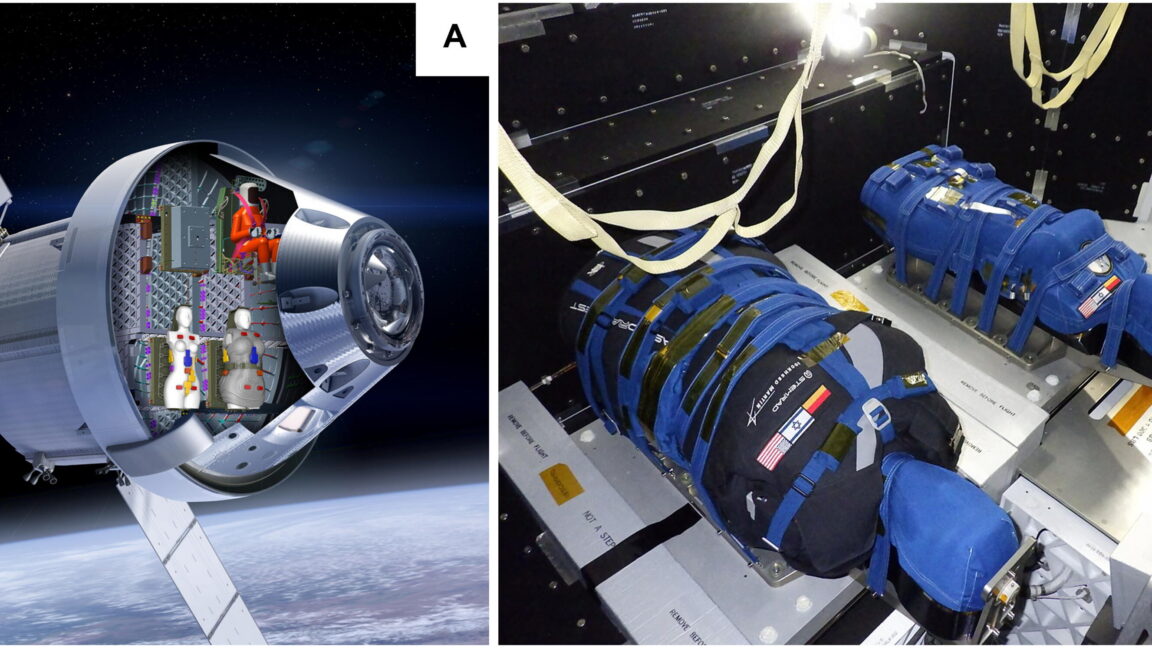
To test this idea, StemRad’s team flew a wearable radiation-shielding vest called AstroRad to the Moon and back aboard NASA's uncrewed Artemis I mission, then used the flight data to calculate how it would perform during an actual solar storm. It turns out the vest would perform roughly as well as the Orion’s heavily shielded onboard shelter the crew was supposed to hide in to wait out a storm.