This “forbidden” exoplanet has an atmosphere scientists can’t explain
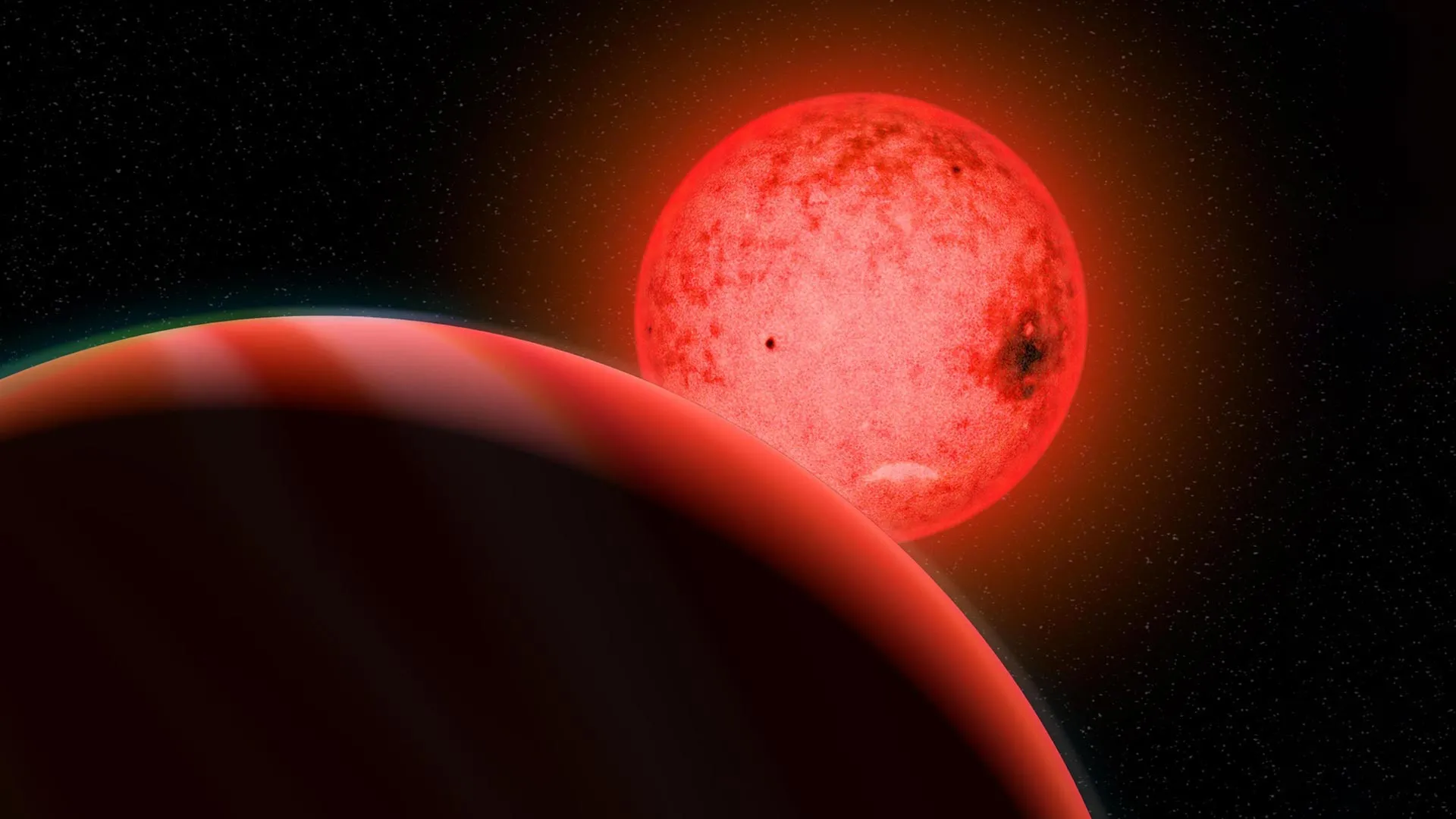
A strange “forbidden” planet spotted by the James Webb Space Telescope is turning planetary science on its head. TOI-5205 b, a Jupiter-sized world orbiting a small, cool star, has an atmosphere surprisingly poor in heavy elements—even less enriched...
A strange “forbidden” planet spotted by the James Webb Space Telescope is turning planetary science on its head. TOI-5205 b, a Jupiter-sized world orbiting a small, cool star, has an atmosphere surprisingly poor in heavy elements—even less enriched than its own star, which defies current theories of how giant planets form.
Earth may have won a cosmic chemistry lottery. Researchers found that during the planet’s earliest formation, oxygen had to be in an extremely narrow “Goldilocks zone” for two life-essential elements, phosphorus and nitrogen, to stay where life...
NASA's mission control in Houston regained communication with the crew after an expected loss of contact for some 40 minutes, as their spacecraft passed behind Earth's natural satellite.
Is consciousness something the brain produces, or is it woven into the fabric of reality itself? Renowned neuroscientist Christof Koch is challenging long-held scientific assumptions by confronting the “hard problem” of consciousness — why and how...
Your brain’s “stop eating” signal may come from an unexpected source. Researchers found that astrocytes—once thought to just support neurons—actually play a key role in controlling appetite. After a meal, glucose triggers tanycytes, which send...
Science Daily
We use cookies to improve your experience. By continuing to use this site, you agree to our use of cookies. Learn more