
Skip to content
Advertisement
When Appliance Fail?

Researchers try to cut the genetic code from 20 to 19 amino acids

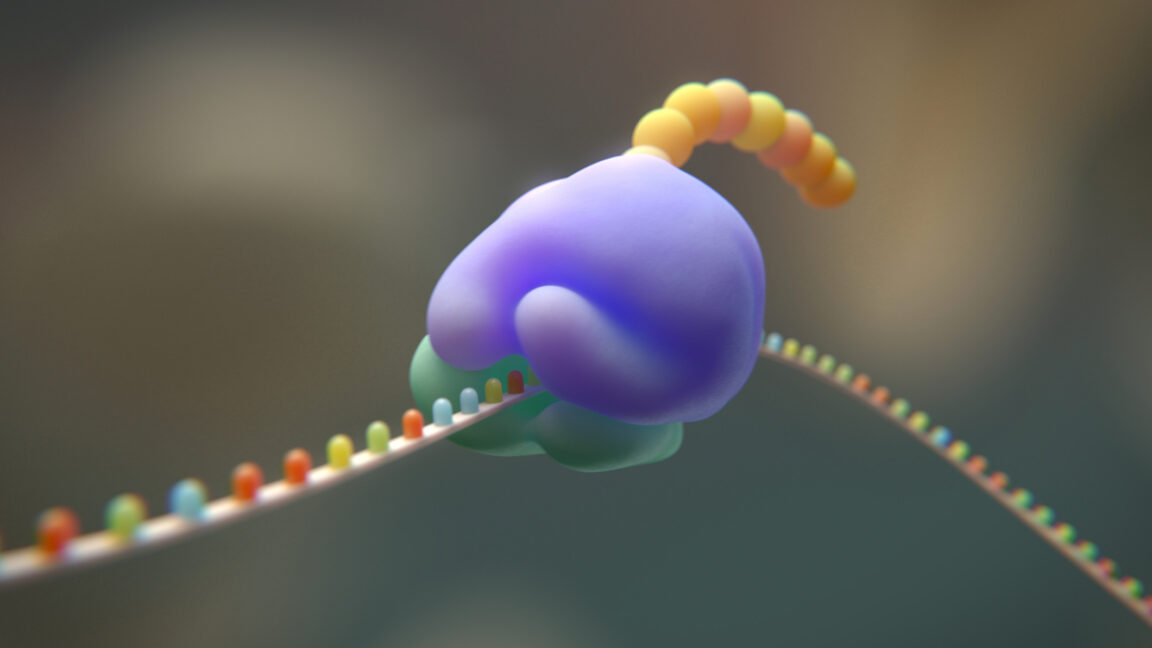
Using AI tools, the team reworked part of the ribosome to need one less amino acid.

schedule 19:34 visibility 121 views
Researchers try to cut the genetic code from 20 to 19 amino acids
Source: Ars Technica

The genetic code is central to life. With minor variations, everything uses the same sets of three DNA bases to encode the same 20 amino acids. We have discovered no major exceptions to this, leading researchers to conclude that this code probably dated back to the last common ancestor of all life on Earth. But there has been a lot of informed speculation about how that genetic code initially evolved.

Most hypotheses suggest that earlier forms of life had partial genetic codes and used fewer than 20 amino acids. To test these hypotheses, a team from Columbia and Harvard decided to see if they could get rid of one of the 20 currently in use. And, as a first attempt, they engineered a portion of the ribosome that worked without using an otherwise essential amino acid: isoleucine.

Changing the code

First off, why would you do this? Most work in the field has focused on altering the genetic code in ways that are useful, such as using more than 20 amino acids to enable interesting chemistry.


Read full article

Comments

newspaper

Originally published at

Ars Technica

open_in_new Read Full Article

Related Articles

Read More

Anthropic is asking Wall Street to believe in AGI
Science

Anthropic is asking Wall Street to believe in AGI

Today on Decoder, I’m joined by Joey Brookhart, an analyst at the chip and AI research firm SemiAnalysis, to help me dig into the story inside the numbers of the Anthropic IPO filing — a document known as an S-1. Anthropic just filed its S-1 to go...

The Verge
Six popular sugar substitutes linked to faster brain aging
Science

Six popular sugar substitutes linked to faster brain aging

A study of nearly 13,000 adults found that people consuming the most artificial sweeteners experienced a 62% faster decline in memory and thinking skills, equivalent to approximately 1.6 additional years of brain aging. Six popular sweeteners were...

Science Daily
Your Appliance Broke?
Reliable Repair for