
Skip to content
Advertisement
When Appliance Fail?

Protein in Homo erectus teeth suggests Denisovans gave us some of their DNA

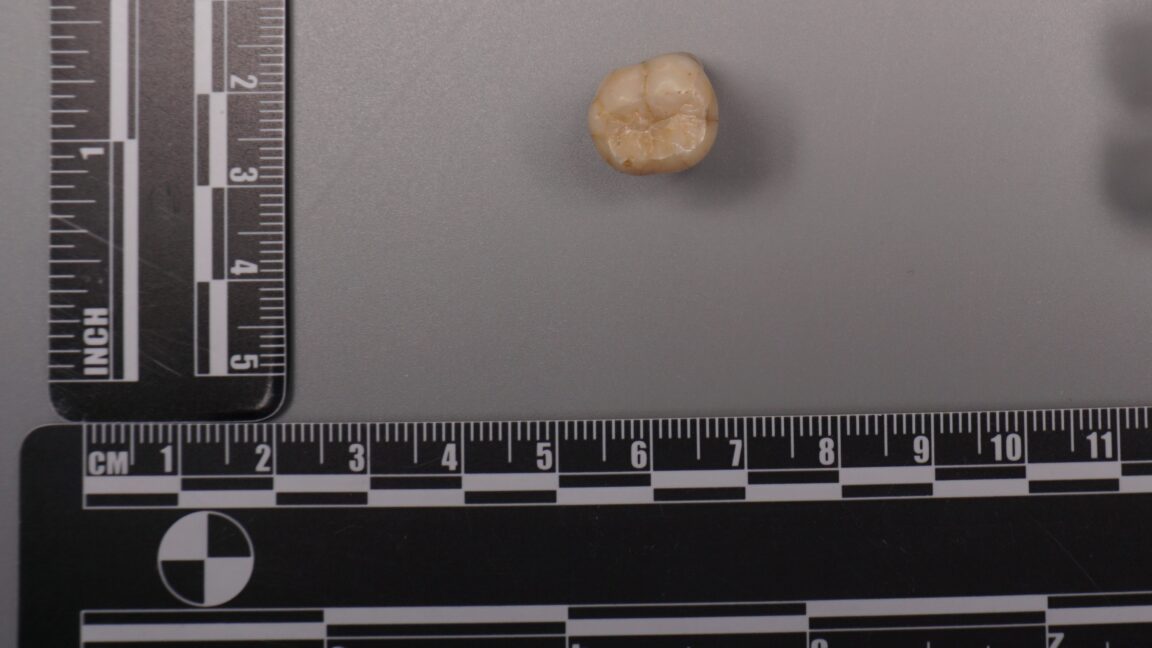
Distinct form of tooth protein in Homo erectus shows up in Denisovans—and us.

schedule 20:27 visibility 109 views
Protein in Homo erectus teeth suggests Denisovans gave us some of their DNA
Source: Ars Technica

Humanity's ancestry has grown far clearer thanks to our ability to obtain ancient DNA. We now know that, as humans left Africa, they interbred with the groups they met there, Neanderthals and Denisovans. Evidence from the Denisovan genome also suggests that this was nothing new; the Denisovans had apparently interbred with an even earlier group. But the identity of that group remained a bit of a mystery.

Now, some evidence from ancient proteins suggests that the mystery group was Homo erectus, a species that left Africa over a million years ago and spread throughout Eurasia. And, thanks to the Denisovans, it appears that modern humans inherited some of that Homo erectus DNA.

In the teeth

Without access to all the repair enzymes made by living cells, DNA rapidly degrades. The double helix fragments, and bases change identity or fall off entirely. While cooler, drier environments slow this process, it sets a hard limit on how far back in time we can obtain DNA sequences. So far, it seems that Homo erectus remains on the far side of that time limit.


Read full article

Comments

newspaper

Originally published at

Ars Technica

open_in_new Read Full Article

Related Articles

Read More

Anthropic is asking Wall Street to believe in AGI
Science

Anthropic is asking Wall Street to believe in AGI

Today on Decoder, I’m joined by Joey Brookhart, an analyst at the chip and AI research firm SemiAnalysis, to help me dig into the story inside the numbers of the Anthropic IPO filing — a document known as an S-1. Anthropic just filed its S-1 to go...

The Verge
Six popular sugar substitutes linked to faster brain aging
Science

Six popular sugar substitutes linked to faster brain aging

A study of nearly 13,000 adults found that people consuming the most artificial sweeteners experienced a 62% faster decline in memory and thinking skills, equivalent to approximately 1.6 additional years of brain aging. Six popular sweeteners were...

Science Daily
Your Appliance Broke?
Reliable Repair for