
Skip to content
Advertisement
When Appliance Fail?

Neanderthals drilled cavities to treat a toothache 59,000 years ago

“Every time I go to the dentist, I think about that guy,” researcher says.

schedule 18:00 visibility 93 views
Neanderthals drilled cavities to treat a toothache 59,000 years ago
Source: Ars Technica

The world’s first dentist was a Neanderthal, according to a recent study.

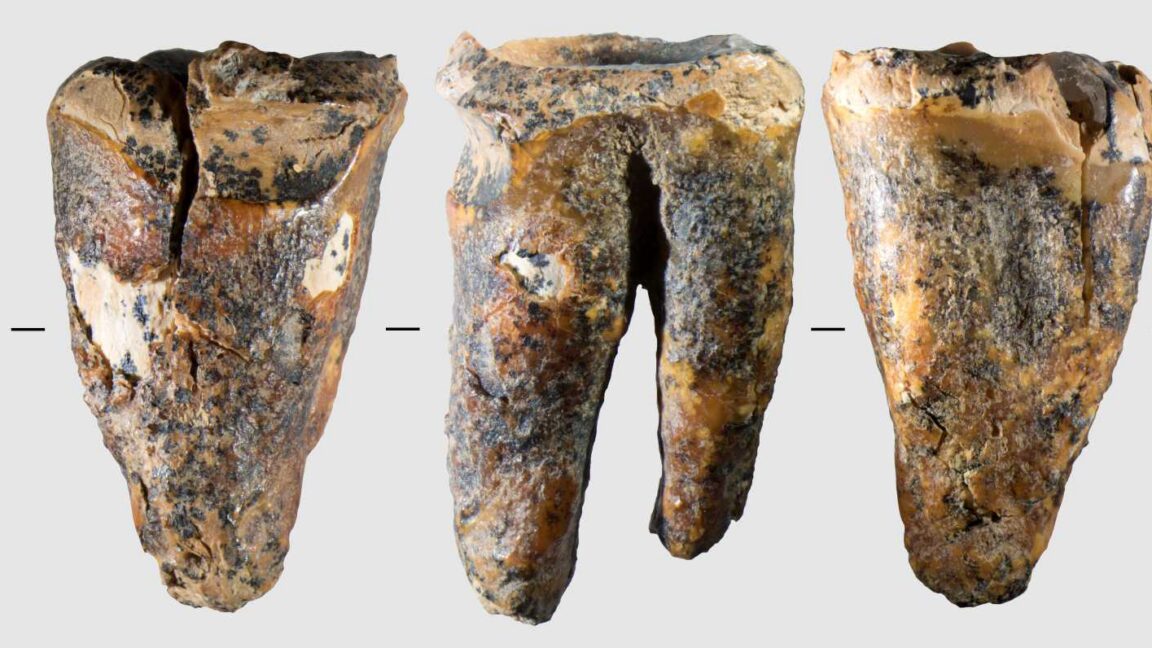
59,000 years ago in what’s now southwestern Siberia, a Neanderthal had a toothache. It must have been a doozy because they were desperate enough to sit still while someone drilled into the tooth with a sharp stone tool, removing the infected tissue and ultimately relieving the pain.

The process left behind a hole in the tooth that paleoanthropologist Alisa Zubova of the Russian Academy of Sciences and her colleagues recognized, tens of millennia later, as dental work. Archaeologists unearthed the tooth at Chagyrskaya Cave in Russia, and it’s now the oldest known evidence of dentistry—or any direct medical treatment.


Read full article

Comments

newspaper

Originally published at

Ars Technica

open_in_new Read Full Article

Related Articles

Anthropic is asking Wall Street to believe in AGI
Science

Anthropic is asking Wall Street to believe in AGI

Today on Decoder, I’m joined by Joey Brookhart, an analyst at the chip and AI research firm SemiAnalysis, to help me dig into the story inside the numbers of the Anthropic IPO filing — a document known as an S-1. Anthropic just filed its S-1 to go...

The Verge
Six popular sugar substitutes linked to faster brain aging
Science

Six popular sugar substitutes linked to faster brain aging

A study of nearly 13,000 adults found that people consuming the most artificial sweeteners experienced a 62% faster decline in memory and thinking skills, equivalent to approximately 1.6 additional years of brain aging. Six popular sweeteners were...

Science Daily

Read More

Baykuşlara tuhaf bir şeyler oluyor: Renk değiştiriyorlar
Science

Baykuşlara tuhaf bir şeyler oluyor: Renk değiştiriyorlar

İsviçre'deki peçeli baykuşlar son 30 yılda daha kızıl kahverengi ve daha yoğun benekli hale geldi. Üç binden fazla peçeli baykuşun DNA'sı doğal seçilimin iş başında olduğunu ortaya koyarken tüylerinin değişmesinin ardındaki avantajın rengin...

TRT Haber
Your Appliance Broke?
Reliable Repair for