MIT scientists turn chaotic laser light into powerful brain imaging tool
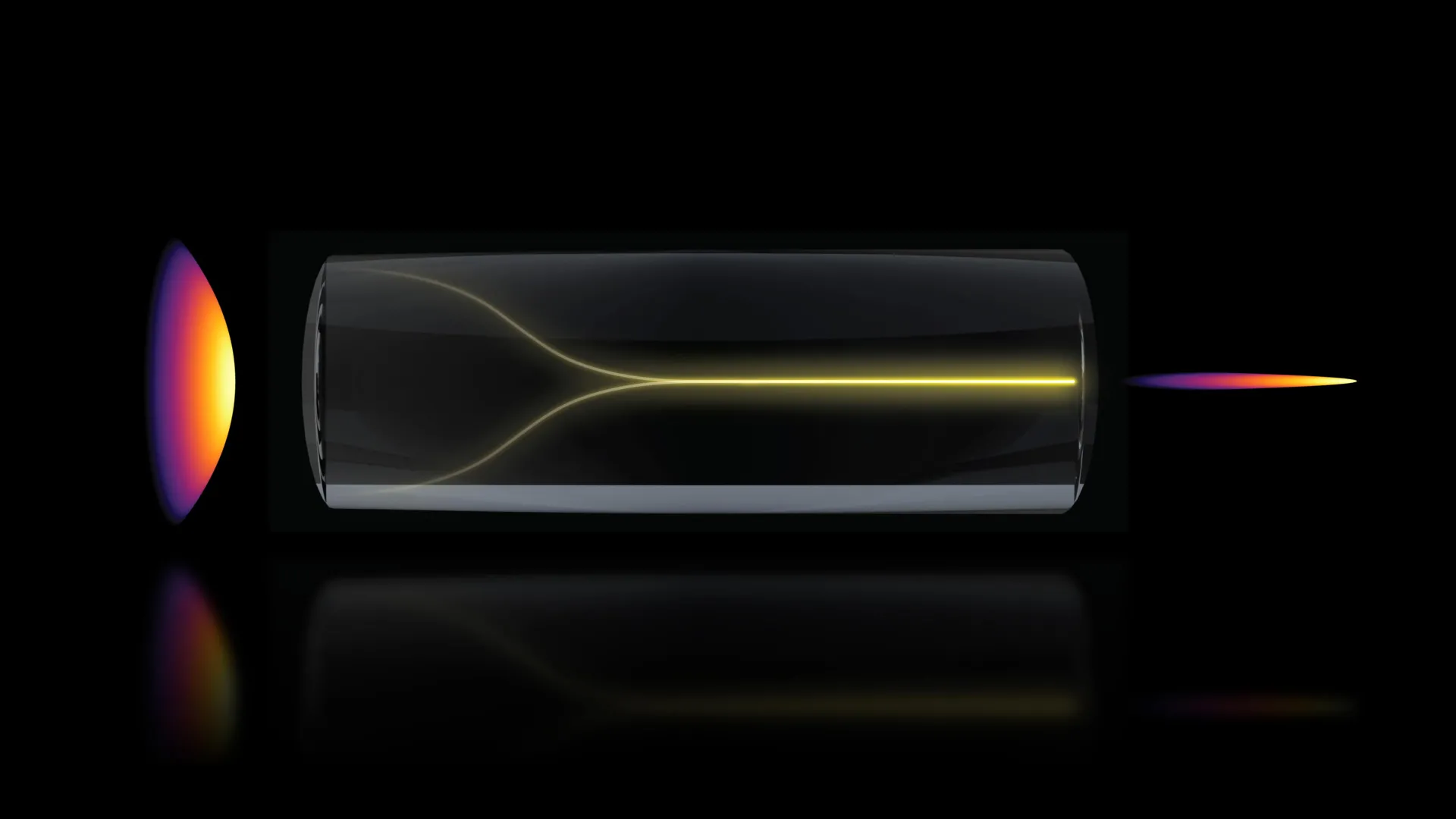
Scientists at MIT discovered that chaotic laser light can spontaneously form a highly focused beam instead of scattering—if the conditions are just right. This “pencil beam” enabled them to image the blood-brain barrier in 3D at speeds 25 times...
schedule
13:10 visibility
112 views
Source: Science Daily

Scientists at MIT discovered that chaotic laser light can spontaneously form a highly focused beam instead of scattering—if the conditions are just right. This “pencil beam” enabled them to image the blood-brain barrier in 3D at speeds 25 times faster than existing techniques. The method also lets researchers watch how drugs move into brain cells in real time. It could dramatically accelerate the development of treatments for neurological diseases.
In this edition of Access Asia, we explore why anti-Indian sentiment is rising in the United States in the wake of the foiled plot targeting a Hindu temple in Illinois. We ask the executive director of the Center for the Study of Organized Hate...
Premières manifestations, premiers débats, premiers engagements militants… Pour de nombreux jeunes, le mouvement lycéen coïncide avec une prise de conscience politique accrue qui transforme leur quotidien, à six mois d’une élection présidentielle à...
Today on Decoder, I’m joined by Joey Brookhart, an analyst at the chip and AI research firm SemiAnalysis, to help me dig into the story inside the numbers of the Anthropic IPO filing — a document known as an S-1. Anthropic just filed its S-1 to go...
A study of nearly 13,000 adults found that people consuming the most artificial sweeteners experienced a 62% faster decline in memory and thinking skills, equivalent to approximately 1.6 additional years of brain aging. Six popular sweeteners were...
Mathematicians have uncovered what they argue is a fundamental flaw in the standard model of the universe, potentially challenging the need for dark energy. Their calculations suggest that the mathematical framework used to describe cosmic expansion...