



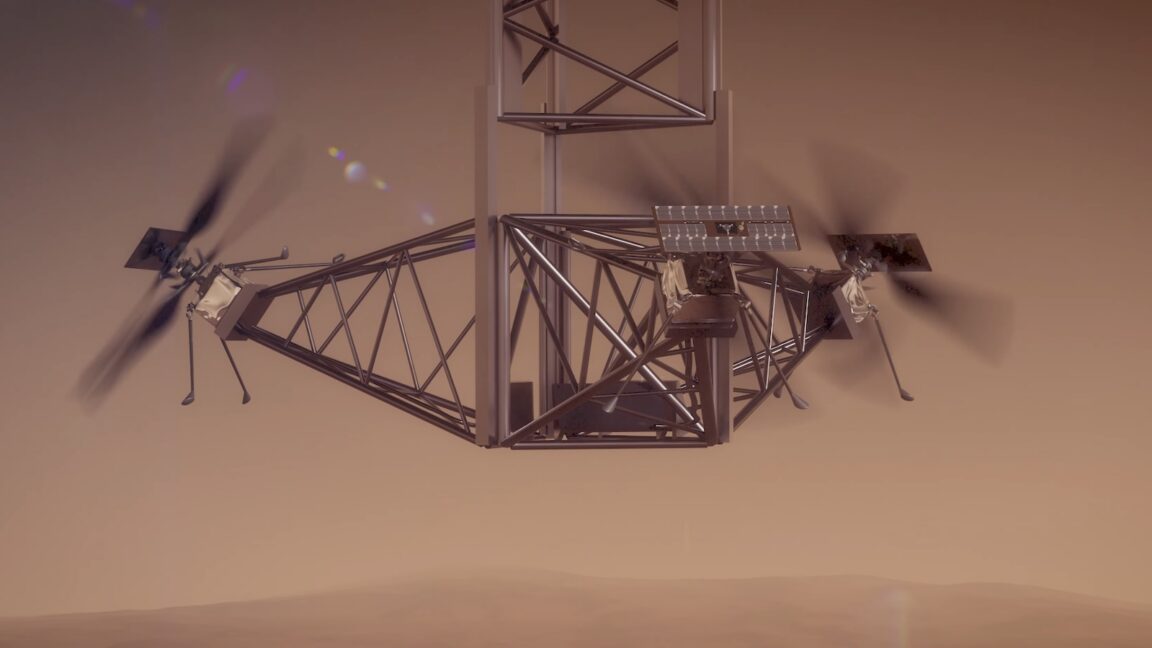

A little more than three years since NASA's Ingenuity helicopter ended its pioneering mission at Mars, engineers at the Jet Propulsion Laboratory in California are designing next-generation Martian rotorcraft to carry heavier payloads longer distances through the planet's low-density atmosphere.
Ingenuity was a resounding success, becoming the first airborne platform to explore another world. The dual-bladed helicopter made 72 flights, overachieving NASA's original goal of five flights over 30 days, after delivery to Mars by the Perseverance rover. By the time the mission ended with a crash-landing in January 2024, Ingenuity had shown scientists a new way to explore other worlds, using air to travel longer distances and reach locations inaccessible to ground vehicles.
NASA plans to send three more helicopters to Mars on the SkyFall mission, which could launch as soon as late 2028. SkyFall is set to ride to the red planet aboard a nuclear-powered spacecraft named Space Reactor-1, or SR-1, one of the tech demo initiatives announced earlier this year by NASA Administrator Jared Isaacman.




 TechCrunch


 DW News
