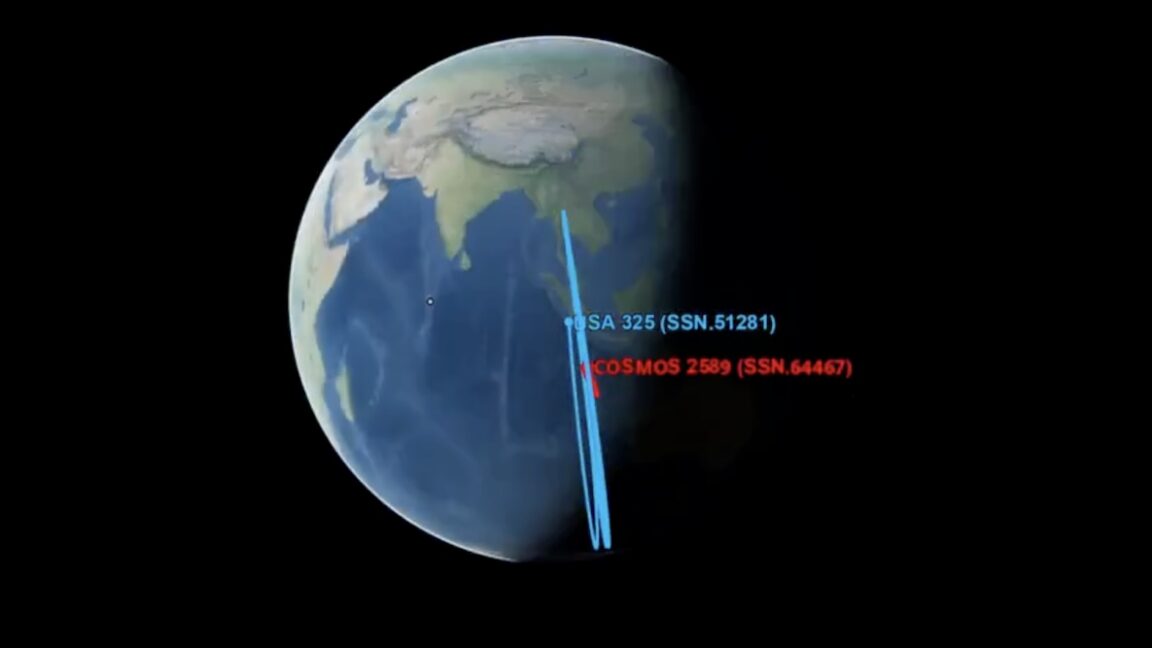
The world's leading space powers desperately want to know what the others are up to high above the equator. For more than a decade, the US military has operated a fleet of "inspector" satellites designed to sidle up to other spacecraft in geosynchronous orbit and take pictures. China started launching its satellites for a similar mission in 2018.
Ars has written about these activities in geosynchronous orbit (GEO) before, but the last few months have seen a couple of interesting developments. First, Russia has now joined the fray with the recent arrival of its own suspected inspector (or attack) satellite in GEO. Second, the US Space Force is poised to order more—perhaps many more—reconnaissance satellites of its own to send into the geosynchronous belt.
GEO is special. The laws of orbital mechanics mean a satellite in this type of orbit, some 22,000 miles (36,000 kilometers) over the equator, moves around the Earth at the same rate as the planet's rotation, causing it to hover over the same location. Commercial and military-owned geosynchronous satellites typically spend years in the same location, or slot, to provide communications services to users.