İçeriğe geç
Advertisement

Contrary to popular superstition, AES 128 is just fine in a post-quantum world

A stubborn misconception is hampering the already hard work of quantum readiness.

schedule 12:35 visibility 60 görüntüleme
Contrary to popular superstition, AES 128 is just fine in a post-quantum world
Kaynak: Ars Technica

With growing focus on the existential threat quantum computing poses to some of the most crucial and widely used forms of encryption, cryptography engineer Filippo Valsorda wants to make one thing absolutely clear: Contrary to popular mythology that refuses to die, AES 128 is perfectly fine in a post-quantum world.

AES 128 is the most widely used variety of the Advanced Encryption Standard, a block cipher suite formally adopted by NIST in 2001. While the specification allows 192- and 256-bit key sizes, AES 128 was widely considered to be the preferred one because it meets the sweet spot between computational resources required to use it and the security it offers. With no known vulnerabilities in its 30-year history, a brute-force attack is the only known way to break it. With 2128 or 3.4 x 1038 possible key combinations, such an attack would take about 9 billion years using the entire Bitcoin mining resources as of 2026.

It boils down to parallelization

Over the past decade, something interesting happened to all that public confidence. Amateur cryptographers and mathematicians twisted a series of equations known as Grover’s algorithm to declare the death of AES 128 once a cryptographically relevant quantum computer (CRQC) came into being. They said a CRQC would halve the effective strength to just 264, a small enough supply that—if true—would allow the same Bitcoin mining resources to brute force it in less than a second (the comparison is purely for illustration purposes; a CRQC almost certainly couldn’t run clusters of Bitcoin ASICs and more importantly couldn’t parallelize the workload as the amateurs assume).

Read full article

Comments

newspaper

Orijinal kaynak

Ars Technica

open_in_new Tam Makaleyi Oku

İlgili makaleler

NASA, Mars'ın nadir görüntülerini yayınladı
Bilim

NASA, Mars'ın nadir görüntülerini yayınladı

Metalik bir asteroide doğru yolculuğunu sürdüren NASAnın Psyche uzay aracı, Marsın yakınından geçerek kızıl gezegenin nadir görülen fotoğraflarını çekti. Ekim 2023'te fırlatılan Psyche, Mars ve Jüpiter'in yörüngeleri arasında, ana asteroit kuşağının...

TRT Haber
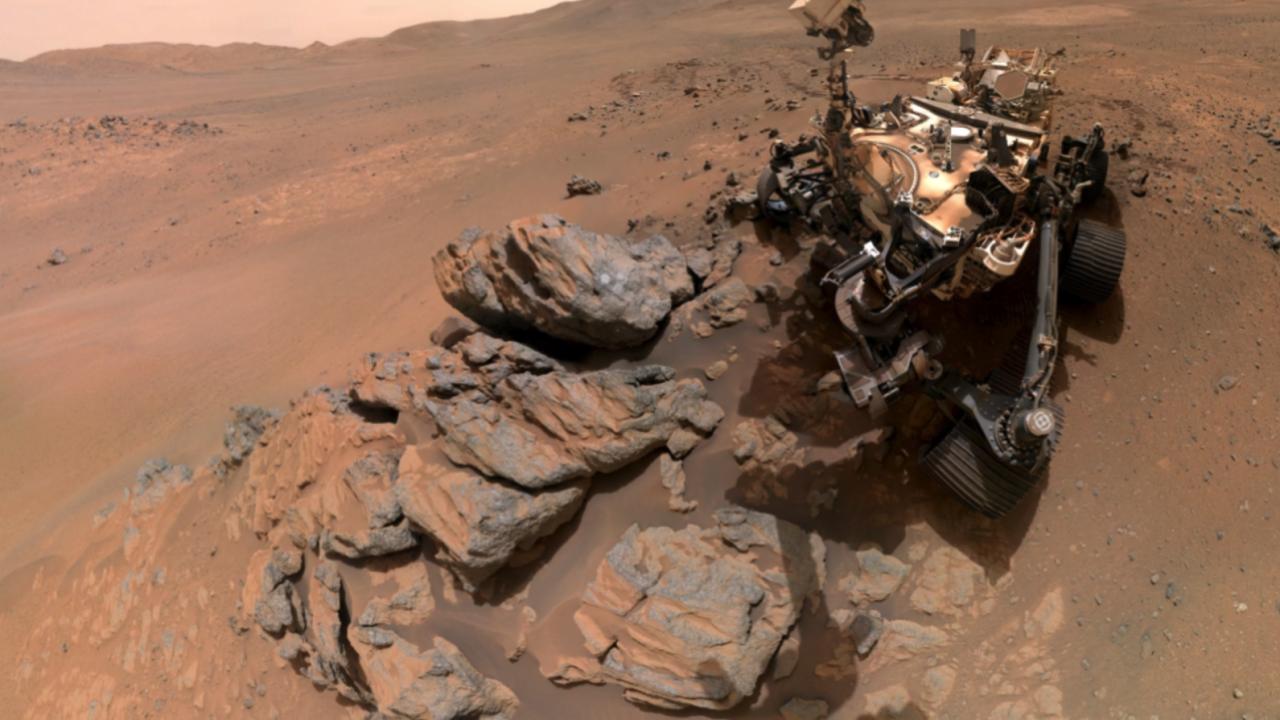
Mars'taki Perseverance keşif aracından yeni özçekim
Bilim

Mars'taki Perseverance keşif aracından yeni özçekim

NASA'nın Mars'taki gözü kulağı olan Perseverance keşif aracı, antik Jezero Krateri'nin sınırlarında bir özçekim gerçekleştirdi. Gezegenin milyarlarca yıllık geçmişine ışık tutan en yaşlı kayaçların arasında çekilen bu kare, bilim dünyasında büyük...

TRT Haber

Devamını oku

SpaceX roketi Ay'a çarpmak üzere
Bilim

SpaceX roketi Ay'a çarpmak üzere

Dünya'nın en yakın komşusu Ay, bu yılın ilerleyen dönemlerinde insan yapımı bir cismin yüksek hızlı çarpışmasına sahne olacak. Bağımsız gökbilimci Bill Gray'in analizine göre, bir SpaceX Falcon 9 roketinin üst aşaması, 5 Ağustos 2026 tarihinde Ay...

TRT Haber
SpaceX Starbase tesisinde patlama
Bilim

SpaceX Starbase tesisinde patlama

SpaceX'in Teksas'taki Starbase tesisinde, dünyanın en büyük roketi olan Starship'in kritik fırlatma testi hazırlıkları sürerken bir patlama meydana geldi. Elon Muskın şirketi tarafından gerçekleştirilen bir "su baskını sistemi" deluge system testi...

TRT Haber