Перейти к содержимому
Advertisement

Flesh-eating bacteria devour man's arm and leg in just three days

When doctors saw him, his limbs were discolored and crackling.

schedule 20:15 visibility 54 просмотров
Flesh-eating bacteria devour man's arm and leg in just three days
Источник: Ars Technica

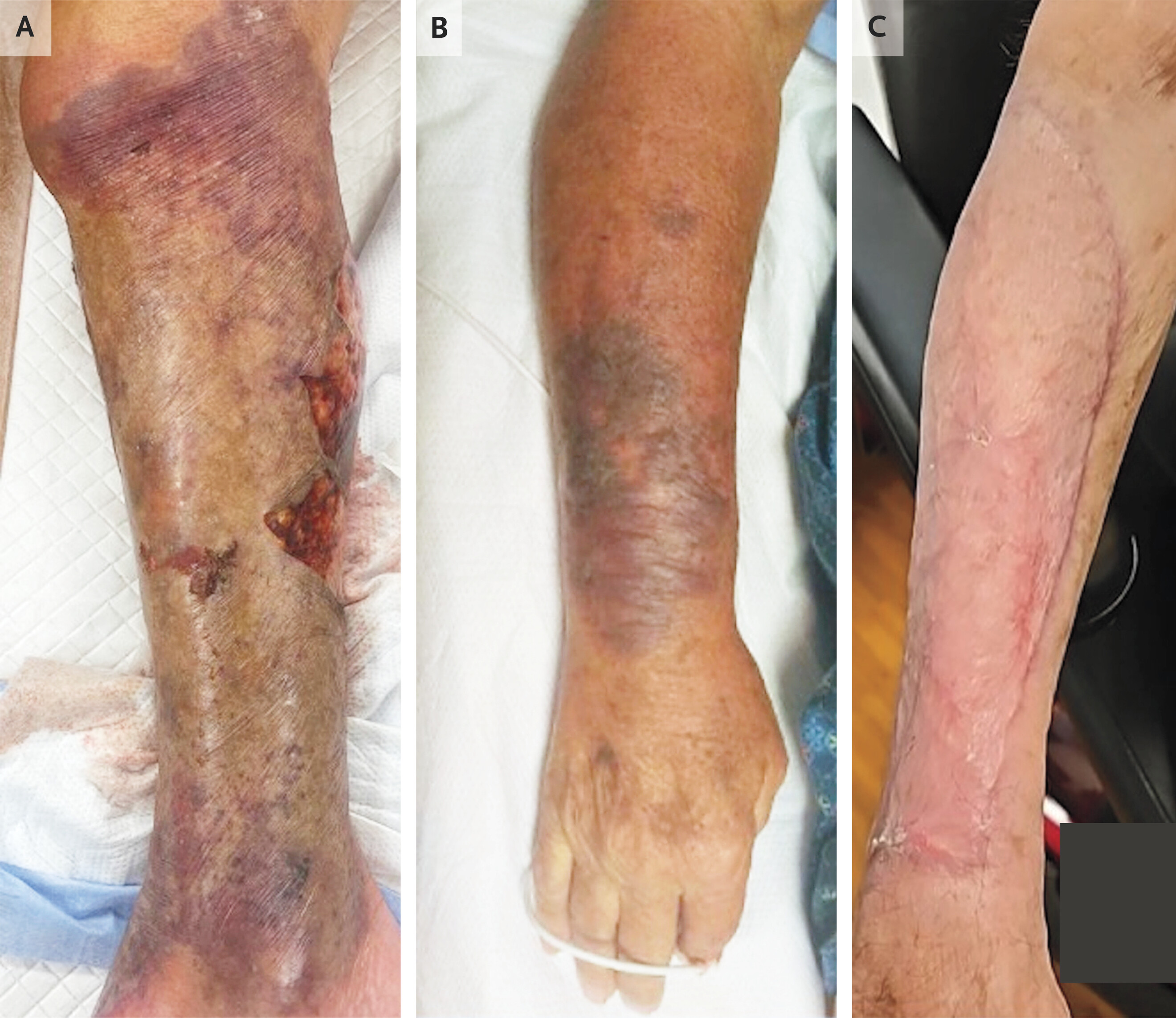
A 74-year-old man went to an emergency department in Florida with rapidly rotting limbs after jumping into the waters off Florida's Gulf Coast.

Just three days earlier, the man was otherwise healthy and active on the coast. But at one point when he jumped into the water, he got a cut on his right leg. It quickly became painful and bruised. Two days later, the skin on his right arm also started changing color.

According to a case report in the New England Journal of Medicine, by day three, when he arrived at the hospital, he was in dire shape. The lower half of his leg was darkly colored, indicating bleeding under his skin. Doctors noted a crackling sound, suggesting gases bubbling out of his dying flesh, and some of the outer layers of skin were peeling off. His arm wasn't much better. It appeared red, discolored, and swollen. A large blood blister (a hemorrhagic bulla) had formed, suggesting a severe flesh-eating infection. (You can see a graphic image here, including an end image of his arm.)


Read full article

Comments

newspaper

Опубликовано на

Ars Technica

open_in_new Читать полную статью

Похожие статьи

Хантавирус: в чем его отличие от COVID-19
Здоровье

Хантавирус: в чем его отличие от COVID-19

Андский штамм хантавируса - единственный, передающийся от человека к человеку, стал причиной вспышки на борту круизного лайнера MV Hondius. В отличие от коронавируса, ученые и врачи знают, как предотвратить эпидемию?

DW Russian
«Цикада» — новый вариант Covid‑19: есть ли повод для беспокойства?
Здоровье

«Цикада» — новый вариант Covid‑19: есть ли повод для беспокойства?

Всемирная организация здравоохранения (ВОЗ) следит за ситуацией с сильно мутировавшим штаммом COVID-19, который на данный момент обнаружен в 23 странах. Эксперты отмечают, что дети, по-видимому, заражаются им чаще, чем взрослые.

BBC Russian