Scientists just found a way to store massive data using light in 3 dimensions
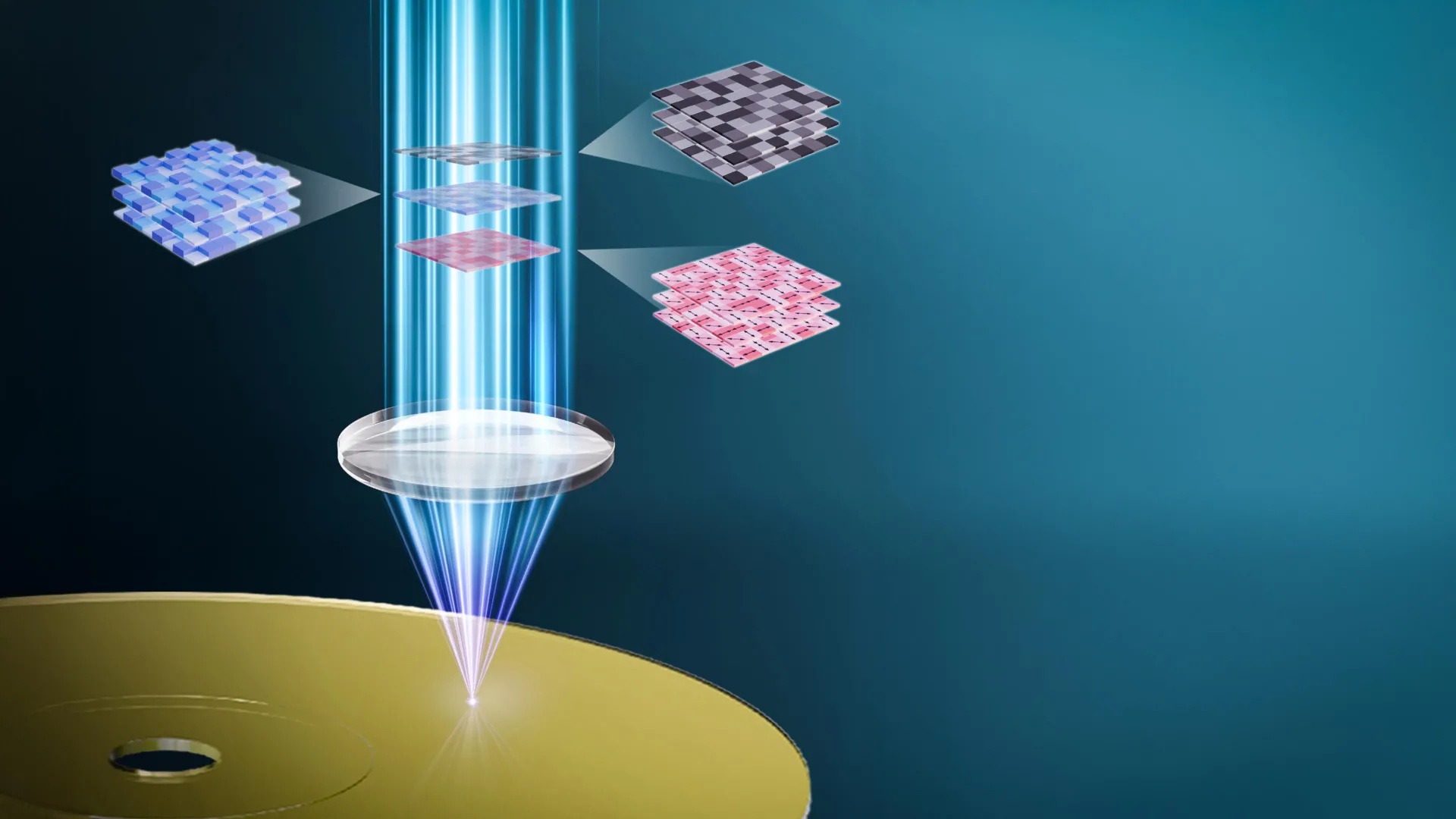
A new holographic storage technique uses light in three dimensions to dramatically increase how much data can be stored. It encodes information throughout a material using amplitude, phase, and polarization, rather than just on a surface. An AI...
schedule
04:58
visibility
22 vistas
Fuente: Science Daily
Leer artículo original →
auto_awesome Este artículo fue traducido automáticamente y puede contener inexactitudes.
A new holographic storage technique uses light in three dimensions to dramatically increase how much data can be stored. It encodes information throughout a material using amplitude, phase, and polarization, rather than just on a surface. An AI model then reconstructs the data from light patterns, simplifying the process. This could pave the way for faster, denser, and more efficient data storage systems.