

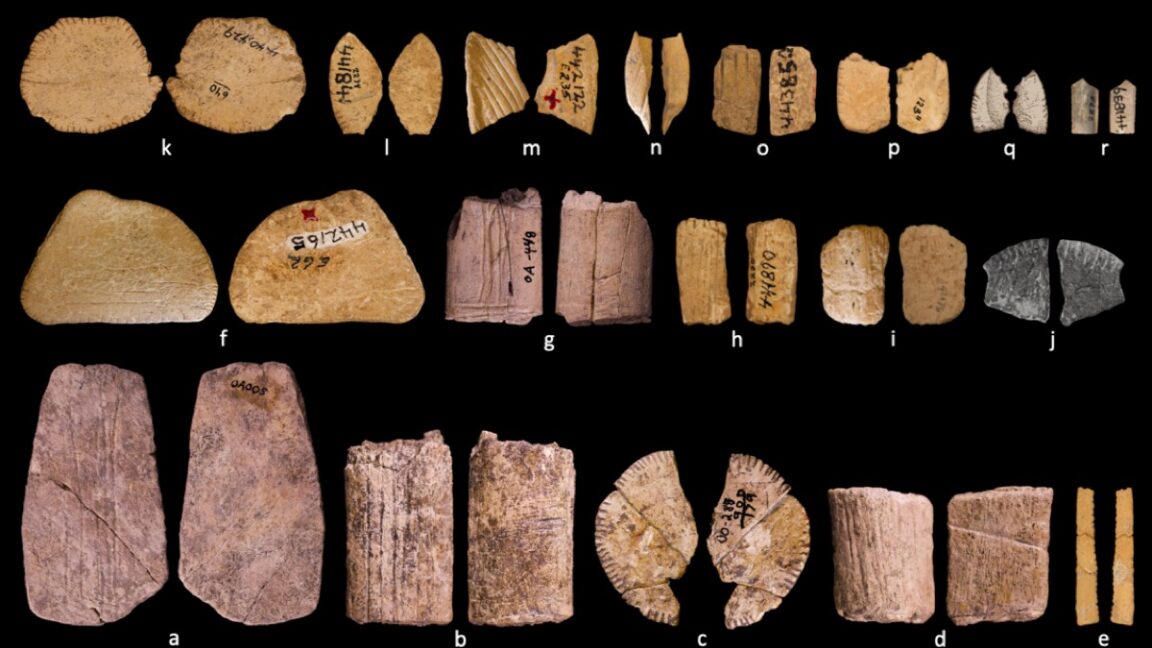
Native Americans have been playing with dice in games of chance for more than 12,000 years, according to a new paper published in the journal American Antiquity. And the oldest examples of Native American dice predate the earliest currently known dice in the Old World by millennia.
“Historians have traditionally treated dice and probability as Old World innovations,” said author Robert Madden, a graduate student at Colorado State University. “What the archaeological record shows is that ancient Native American groups were deliberately making objects designed to produce random outcomes, and using those outcomes in structured games, thousands of years earlier than previously recognized.”
Madden's interest in Native American gaming started with Maya ballgames and then expanded to include Native American dice and games of chance. These were rudimentary dice with just two sides, rather than the six sides of modern dice, typically described as "binary lots." And Madden found they were common to virtually every Native American tribe. Archaeologists had traced the use of such dice back 2,000 years, but most were hesitant to conclude that dice-like artifacts older than that were, in fact, dice.