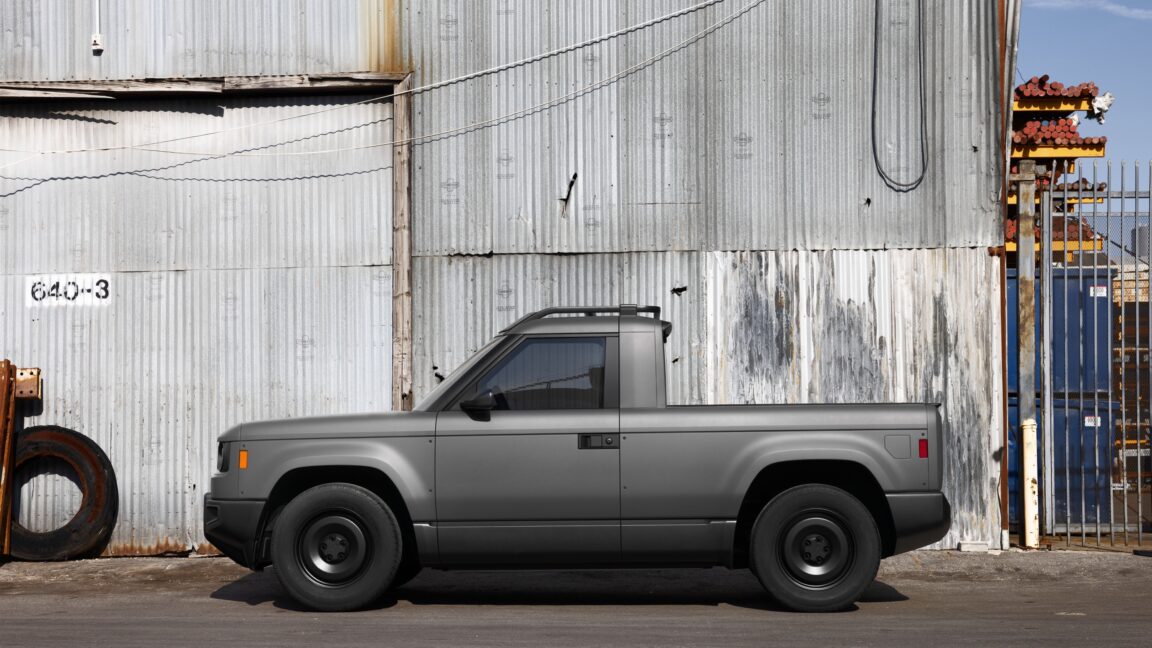
The electric pickup startup Slate Auto starts the week off well. This morning it announced it has raised $650 million as part of its latest funding round.
Slate is a refreshing outlier among all the aspiring new electric vehicle OEMs. Lucid debuted with an electric sedan that intended to move the game on from the Tesla Model S. Rivian said, "What if [we had] supercar suspension and a smiley face for an EV with serious off-road skills?" Both arguably succeeded. Sony Honda Mobility wanted to make the EV a true digital content hub, at least until one half of that joint venture called time—who knows how that project would have turned out, although I suspect sales would have been underwhelming.
But Slate, which got its start in 2022, is doing things differently. It's not starting sales with something near six-figures; far from it. The abolishment of the federal clean vehicle tax credit was no doubt inconvenient—with it, a sub-$20,000 starting price was possible, but even at "mid-$20,000s" the Slate Truck should match or undercut the Ford Maverick XL, currently the cheapest pickup on sale in the US.

 DW Deutsch